Let’s Talk About Healing
Leap of Faith?
In 1992 there was a movie starring Steve Martin called “Leap of Faith.” Steve Martin plays the role of Jonas Nightingale, a charismatic traveling evangelist. He travels with his team on a bus from town to town, holding big tent revivals and “healing” people. He is a “faith healer,” at least that’s what we used to call people like him.


He put on a good show with a lot of music, a lot of excitement, and staged faith healings that made people in the audience both believe in what he was doing and give their money to “support” him. The tension in the movie revolved around an interesting question: what happens when this kind of “faith” comes face to face with authentic faith?
The Questions We All Ask
This is the problem many of us face. We believe Jesus healed and performed miracles in His earthly ministry. We wonder if He can still heal people today.
We believe Jesus loves us and cares for us, so we wonder why it feels like our prayers go unanswered.
We believe Jesus is all powerful, but we wonder why bad things happen to good people and why there is pain and suffering in the world.
These are real questions. And these questions don’t necessarily have easy answers, especially when you’re right in the middle of the pain yourself.
Truth is, a lot of harm has been done by these so-called faith healers. No doubt, there are times in Scripture where Jesus heals and that healing is connected to the faith of the person being healed. Sometimes Jesus is amazed by faith. Other times, He is amazed by their lack of faith.
Other times, Jesus heals someone because of the faith of other people, but there seems to be no connection to the faith of the person being healed. There is a connection between faith and healing, but it can’t be reduced to a formula.
Any attempt to put the power of God in a box, or to treat Jesus like a genie in a bottle waiting to grant our every wish, reduces God and seeks to control something we cannot control, understand something we cannot understand, and explain away the mystery that is our faith in the living God.
Does this mean we shouldn’t pray for help and healing? Absolutely not! We always pray for God to do what only God can do. But we also remember that He alone is God, and we trust Him with everything, come what may.
So what do we do when it comes to faith, Jesus, healing, the problems of pain and suffering, and our hope in God to do impossible things? Let’s talk about that, but instead of starting with our questions, let’s start with Jesus.
Setting the Scene in Matthew 8
In Matthew 8, Jesus does something that is truly miraculous. He heals three different people in back-to-back-to-back displays of His power and mercy.
While these three stories are similar in that Jesus heals someone in all three, they are also distinct in terms of who He heals. Right here, Matthew is showing us something about Jesus that some people might miss. But before we get to Matthew 8, let’s set the scene and put this text in context.
A few things to keep in mind before we read Matthew 8.
First: Remember that Matthew is writing his Gospel, his Good News story about the life and ministry of Jesus and how He is God’s Messiah come to save the world, for the church. His Gospel is both instructional — teaching us about what life is like in the Kingdom of Heaven — and inspirational — moving us to love God and love others more because of the great love of God revealed in Christ Jesus at the cross.
Second: Remember that the church Matthew was writing to was in transition. What I mean is that the church at the time of Matthew’s writing had been primarily Jewish, but was becoming more and more Gentile. The church was becoming more diverse every day. Gentiles were coming to faith in Jesus, and the church was growing as the Gospel continued to spread from Jerusalem, to Judea, Samaria, and the ends of the earth (Acts 1:8).
Third: Remember what happens right before and right after Matthew 8. In Matthew 7, Jesus is finishing the Sermon on the Mount and He talks about false prophets. He says you can identify them by their “fruit” — that is, by the way they act, by what they do. A good tree produces good fruit, a bad tree produces bad fruit. In the same way, you can judge Jesus based on His fruit, His actions, His activity. So let’s pay attention to what Jesus does.
Then Jesus talks about true disciples. These are people who don’t just know the word of God, the heart of God, but they know God. So let’s pay attention to what Jesus reveals about the heart of God in His ministry.
After Matthew 8, in Matthew 9, Jesus continues to heal the sick, but He also calls sinners to be His disciples and says it’s not the healthy who need a doctor, but the sick. Here, Jesus makes this connection between sin and sickness. Some of us need physical healing; all of us need spiritual healing for our sin-sick souls. Remember that — it’s important for Matthew 8 as well.
Jesus Touches the Untouchable
1 Large crowds followed Jesus as he came down the mountainside. 2 Suddenly, a man with leprosy approached him and knelt before him. “Lord,” the man said, “if you are willing, you can heal me and make me clean.” 3 Jesus reached out and touched him. “I am willing,” he said. “Be healed!” And instantly the leprosy disappeared. 4 Then Jesus said to him, “Don’t tell anyone about this. Instead, go to the priest and let him examine you. Take along the offering required in the law of Moses for those who have been healed of leprosy. This will be a public testimony that you have been cleansed.” — Matthew 8:1-4, NLT
If you’re reading this story for the first time, there are a couple of details that jump off the page.
First, Jesus here is likely healing a Jewish man. That’s an important note. This man has leprosy. That’s also an important detail. As someone with leprosy, you were required to quarantine outside the city, and if anyone started coming your way, you had to shout, “Unclean, unclean!” That would warn people to stay away from you. No one was supposed to come near you (Leviticus 13:45-46). And no one would ever touch you. It was a deadly disease, but it also meant a life of isolation and aloneness.
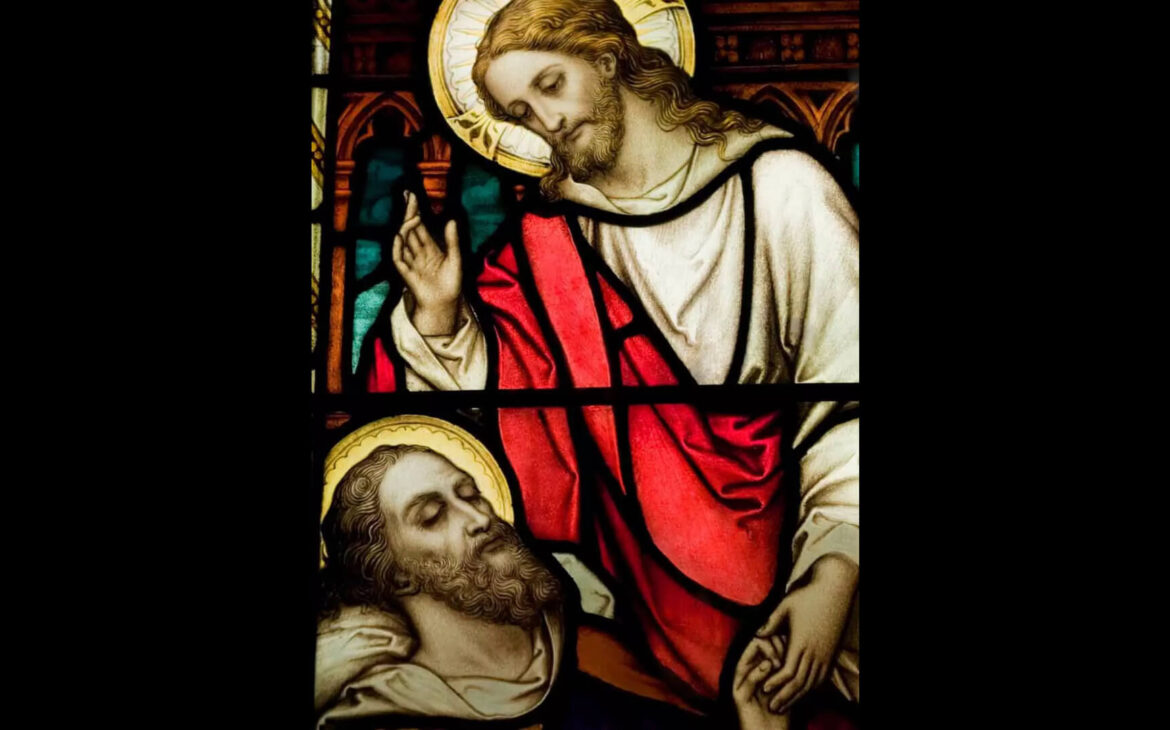
What does Jesus do when He encounters this man with leprosy? He touches him! And He heals him. Could Jesus have healed him without touching him? Absolutely. Jesus heals people in different ways, and sometimes He just speaks and the person who is sick is healed. But here, Jesus touches the untouchable.
The fear was that if you touch a leper, you might get leprosy! That was one fear. But the other factor was that a leper was considered unclean by the law of Moses. If you touch someone who is unclean, then you become unclean. However, the uncleanness of this man does not contaminate Jesus. Jesus’ holiness cleanses the leper’s uncleanness and heals him. Remember that.
Your uncleanness in the presence of Jesus can be cleansed and healed by His holiness. Sometimes we think we have to stay away from Jesus because of our sin and shame.
Notice, the leper doesn’t doubt Jesus’ ability to heal. He doubts whether Jesus would be willing to heal someone like him. He doesn’t question Jesus’ power; he’s curious about Jesus’ grace. He’s fully aware of his condition. Yet Jesus is willing to move toward him to heal him, cleanse him, make him new, make him whole. In the same way, Jesus is willing to move toward you.
Many people ask a similar question. Jesus answers: “I am willing.”
Faith Like No Other
Right after this, Jesus is approached by a Roman officer. Listen to how Matthew tells the story…
5 When Jesus returned to Capernaum, a Roman officer came and pleaded with him, 6 “Lord, my young servant lies in bed, paralyzed and in terrible pain.” 7 Jesus said, “I will come and heal him.” 8 But the officer said, “Lord, I am not worthy to have you come into my home. Just say the word from where you are, and my servant will be healed. 9 I know this because I am under the authority of my superior officers, and I have authority over my soldiers. I only need to say, ‘Go,’ and they go, or ‘Come,’ and they come. And if I say to my slaves, ‘Do this,’ they do it.” 10 When Jesus heard this, he was amazed. Turning to those who were following him, he said, “I tell you the truth, I haven’t seen faith like this in all Israel! 11 And I tell you this, that many Gentiles will come from all over the world—from east and west—and sit down with Abraham, Isaac, and Jacob at the feast in the Kingdom of Heaven. 12 But many Israelites—those for whom the Kingdom was prepared—will be thrown into outer darkness, where there will be weeping and gnashing of teeth.” 13 Then Jesus said to the Roman officer, “Go back home. Because you believed, it has happened.” And the young servant was healed that same hour. — Matthew 8:5-13, NLT
Now this is an interesting moment. Matthew, writing to a church that is becoming more and more Gentile, tells us that Jesus is amazed by the faith of a Roman officer! Not only that, He heals his Gentile slave. So someone who was previously considered an outsider to the people of God is called out because of his extraordinary faith. Jesus is willing to heal his servant because of his amazing faith. Jesus says, “Because you believed, it has happened!”
So faith in Jesus is powerful and effective (James 5:16). In this moment, Jesus heals someone from a distance just by speaking. He heals someone who — we don’t know much about his faith — but his healing comes because of the faith of another.
So far, Jesus has healed a Jew and a Gentile, slave and free, but Jesus isn’t done yet. Keep reading, and what happens next completes this set of three stories and reveals something even more that Matthew wants the church to see.
Restored to Serve
14 When Jesus arrived at Peter’s house, Peter’s mother-in-law was sick in bed with a high fever. 15 But when Jesus touched her hand, the fever left her. Then she got up and prepared a meal for him. — Matthew 8:14-15, NLT
Here, Jesus heals a woman who is bedridden because of a fever. He heals her, and she is immediately and fully healed. That is demonstrated by what she does next: she gets up and prepares a meal for Jesus.
She responds to healing by serving the One who healed her! Her restoration results in ministry.
And now, in back-to-back-to-back stories, Jesus has healed Jew and Gentile, slave and free, male and female. He demonstrates His ability to heal every kind of illness and brokenness. He teaches us who is welcomed and included in His Kingdom. His healing doesn’t just restore broken bodies — it restores people to community, family, fellowship, and service.
He Healed Them All
16 That evening many demon-possessed people were brought to Jesus. He cast out the evil spirits with a simple command, and he healed all the sick. 17 This fulfilled the word of the Lord through the prophet Isaiah, who said, “He took our sicknesses and removed our diseases.” — Matthew 8:16-17, NLT
Matthew emphasizes something here that isn’t found in the other Gospels. He says that Jesus healed “all” the sick. In contrast, Mark tells us that Jesus healed “many” who were sick (Mark 1:32-34). Why does Matthew say “all”?
Because Matthew wants to make the point to the church: Jesus includes those who are excluded. The unclean, the Gentile, the woman, Jesus restores and heals them all. And His healing is for those who are physically sick, but we know in Matthew 9 that Jesus also came to heal those who are spiritually sick.
Right here, in Matthew 8:17, He makes the powerful connection to Isaiah 53, where the prophet says the Messiah came to take our sickness and remove our diseases. In Isaiah 53:5, the prophet says that it is “by his wounds we are healed.”
Jesus came and He healed those who were physically sick. But He also came to heal those who are spiritually sick. Many of us need physical healing, and we want to pray for that. All of us need spiritual healing, forgiveness for our sin, and we want to pray for that too. We all need healing for our sin-sick souls.
When Healing Doesn’t Come the Way We Expect
Will you come to Jesus for healing?
One of the things people ask me to do is pray for healing for them or for someone they love who is sick. Just so you know, I don’t think my prayers have any more power than your prayers do. We are all, as believers in Jesus, a part of the “royal priesthood” (1 Peter 2:9-10). But I am more than willing to pray for and with those who need help and healing. Unlike Jonas Nightingale, not a lot of people are immediately healed after I pray for them. But you should also know, the people I pray for are actually sick, unlike the people Jonas prayed for and healed in the movie!
And this raises a serious question: what do we do when we pray for people who need physical healing but healing doesn’t come?
I think that’s a serious question. It’s one that many faithful Christians wrestle with. I don’t want to pretend like I have all the answers, but I do want to share a few things from Scripture that may help.
1. Sometimes when we pray for healing, God heals.
I wish I could say that I’ve seen this often in my ministry. I wish I could say that every time I pray for a miracle, I see a miracle. But that would not be honest. I do believe in the mighty power of God, and I do believe He can and still does miracles. And I will always pray for God to do impossible things, because nothing is impossible for God. I do know of times when God has done the impossible, and I will continue to have faith, because miracles happen every day! I want to remind you, sometimes when we pray, God does heal! He has the power to heal. Absolutely.
2. Sometimes we pray, and God gives ultimate healing.
What I mean is that God takes the person home to Heaven, where they are fully and finally and completely healed. In Heaven, everything is the way it’s supposed to be. There is no more pain, suffering, hurting, or tears. Everyone in Heaven is healed! Sometimes we pray, and God takes the person home. And that is glorious, because we believe in resurrection. We believe death has been defeated. This world is not our home; we’re just passing through, as the old song says.
3. Sometimes we pray, and God gives us the grace to endure.
The Apostle Paul may be our greatest example here. He had a thorn in the flesh, that’s what he called it — we don’t know what it was. He prayed for God to take it away, but God did not. Instead, Paul learned that God’s grace is sufficient. He said that when he prayed for God to take it away, he heard God say…
“My grace is sufficient for you, for my power is made perfect in weakness.” — 2 Corinthians 12:9, NIV
Sometimes we pray for healing, but instead of getting healing we get something better — we get God. We get His presence. We come to know His nearness. In fact, some of the most faith-filled people I know are those who have struggled greatly with physical pain and sickness, but they have kept their faith in God and learned to fully rely on Him in ways I have not. They have come to learn and know something about God’s all-sufficient grace.
Sometimes we pray and God heals, sometimes we pray and God takes us home, and sometimes we pray and God gives us the grace to endure. But let me give you one more.
Sometimes we pray for healing, and what we want is physical healing; it may even be what we need, but what God always has in mind for us is spiritual healing. Jesus wants to heal our sin-sick souls.
4. When we pray, God always wants to heal our sin-sick souls.
It is by His wounds that we are healed (Isaiah 53:5). Jesus came to seek and save the lost (Luke 19). I want to remind us of this because sometimes we can become more focused on those who are physically sick than those who are spiritually sick. We forget the seriousness of our sin. We forget that Jesus came not just to heal but to save us from our sins!
As Matthew continues his Gospel story, he makes this abundantly clear. In fact, you might say Matthew’s Gospel is a short story about the life and ministry of Jesus that sets up the larger story of His passion — the story of the cross, the death, burial, and resurrection of Jesus, the story of how Jesus came to save us, all of us, Jew and Gentile, male and female, slave and free, from our sin and shame so that we might have the hope of Heaven.
In Jesus There Is Healing and Hope
Only Jesus can heal us! In Jesus there is healing and hope.
Would you put your hope in Him? How?
- Like the leper, come to Jesus no matter how unclean or impure you think you are.
- Like the Roman officer, confess your faith in Jesus.
- Like Peter’s mother-in-law, once Jesus heals you, give your life to serving Him.
We agree that there is pain and suffering in the world. That’s because we live in a world that is fallen and broken because of sin. But we believe, we have faith, in the only One, the only Name, who has the power to heal and the power to save.
His name is Jesus. Will you put your faith in His name?
Want more from this series? Click here.