Jack
Why do we have to suffer?
Did you hear the story about Jack Stradinger?
Jack is 27 years old and he just finished his first ever 100 mile race. You may wonder why somebody, why anybody, would want to run a 100 mile race!? I mean, is he crazy?


Actually, he did it because he cared. Jack is from Dallas, but he has a grandfather who lives in Kerrville. And Jack wanted to do something to help the victims of the Hill Country floods. He had never done this before, but he decided to try and run 100 miles in less than 24 hours to raise money for flood victims, many of whom he knows personally, who lost everything.
He started his race on Monday night at 6pm. By the time he finished the race just before 6pm on Tuesday night, he had raised more than $20,000.

When asked about why he did this, he said… “I want to suffer and go to the deepest place of suffering I can go — for those suffering more than me.”
Sometimes we suffer.
Sometimes (like Jack) we choose to suffer.
Sometimes we suffer because of our own poor decisions.
Sometimes we suffer because of the poor decisions of others.
And sometimes we suffer because we live in a broken and fallen world.
Whenever we suffer, we ask God, “Why?” “Why me?” “Why now?” “Why this?” “Why them?” “Why God?”
Why do we have to suffer? Why does God allow suffering?
What do we we do with suffering?
If you’ve ever suffered and struggled with the question, “Why?” you should know you are not alone. You’re not the first one to ask, “Why God?”
People of faith have long struggled with questions about suffering. And we could look at a lot of different people in Scripture and see their struggle with this question, but today I want to invite you to join me in a short story that is found in the middle of one of the darkest times in Israel’s history.
In Ruth, we have one of the most beloved stories in all of scripture, but it has a very difficult beginning.
Ruth 1
1 In the days when the judges ruled in Israel, a severe famine came upon the land. So a man from Bethlehem in Judah left his home and went to live in the country of Moab, taking his wife and two sons with him. 2 The man’s name was Elimelech, and his wife was Naomi. Their two sons were Mahlon and Kilion. They were Ephrathites from Bethlehem in the land of Judah. And when they reached Moab, they settled there.
3 Then Elimelech died, and Naomi was left with her two sons. 4 The two sons married Moabite women. One married a woman named Orpah, and the other a woman named Ruth. But about ten years later, 5 both Mahlon and Kilion died. This left Naomi alone, without her two sons or her husband.
Naomi didn’t run a 100 miles in a day, but she was definitely hurting in every way imaginable.
First, she had to move away from her people, her home, and move to a foreign land because of a severe famine. The story has barely started and Naomi and her husband, Elimelek, are suffering from near starvation. They get to this place called Moab and then Elimelek dies! Now, Naomi is living in a foreign land as a single mom with her two boys. Life isn’t getting any easier.
But then, Naomi’s two sons both die! Now she’s lost her husband, her two sons, and she’s living in a foreign land. Add to that, even after ten years of marriage, she doesn’t have any grandkids. This is a real problem because she was living in a very patriarchal society. Now there was no man, not even a grandson, who could help provide for or protect the family. The situation feels hopeless. Within the span of five verses, Naomi has seemingly lost absolutely everything and is without hope.
Tearful Goodbyes
Naomi is suffering, grieving, hurting. Then she hears that things are better back in Bethlehem and she decides to go home. Orpah and Ruth, her Moabite daughters in law, plan to go with her. But then, Naomi tells them…
8 “Go back to your mothers’ homes. And may the LORD reward you for your kindness to your husbands and to me. 9 May the LORD bless you with the security of another marriage.” Then she kissed them good-bye, and they all broke down and wept.
Naomi thinks that they will be better off if they return to their families. There is no need for them to suffer with her. If they return to their homes, they will at least be provided for. They will have a roof over their head and food to eat. If they stay with her, who knows?
After shedding many tears, Orpah decides to return to her home. But Ruth is resolute in her decision to stay with Naomi. Ruth tells her…
16 “Don’t ask me to leave you and turn back. Wherever you go, I will go; wherever you live, I will live. Your people will be my people, and your God will be my God. 17 Wherever you die, I will die, and there I will be buried. May the LORD punish me severely if I allow anything but death to separate us!”
And right there in verse 17, Ruth says something that points to a shift that has happened in her heart. Even though she is a Moabite woman, a foreigner, an outsider, she calls God by name. She calls Him the “LORD.” Whenever you see the LORD in all caps, that’s how our English Bibles indicate that the Hebrew name for God, YHWH, is being used here. Ruth calls God by name and she tells Naomi, “your God will be my God.”
So now what unites them is greater than anything that could separate them because they have a shared faith, a shared hope in the one true God!
Call Me Mara
19 So the two of them continued on their journey. When they came to Bethlehem, the entire town was excited by their arrival. “Is it really Naomi?” the women asked.
20 “Don’t call me Naomi,” she responded. “Instead, call me Mara…”
As far as I know, Naomi is the only person in scripture to change her own name. She tells the women in Bethlehem, don’t call me Naomi. Naomi means “Pleasant,” “Delightful,” or “Sweet.” She says, don’t call me that. Call me, “Bitter!”
Why?
“…for (because) the Almighty has made life very bitter for me. 21 I went away full, but the LORD has brought me home empty. Why call me Naomi when the LORD has caused me to suffer and the Almighty has sent such tragedy upon me?”
This is the human side of faith.
Naomi feels like “the Almighty has made life very bitter” for her.
She believes that “the LORD has brought her home empty.”
She thinks that “the LORD has caused her to suffer and the Almighty has sent tragedy upon her.”

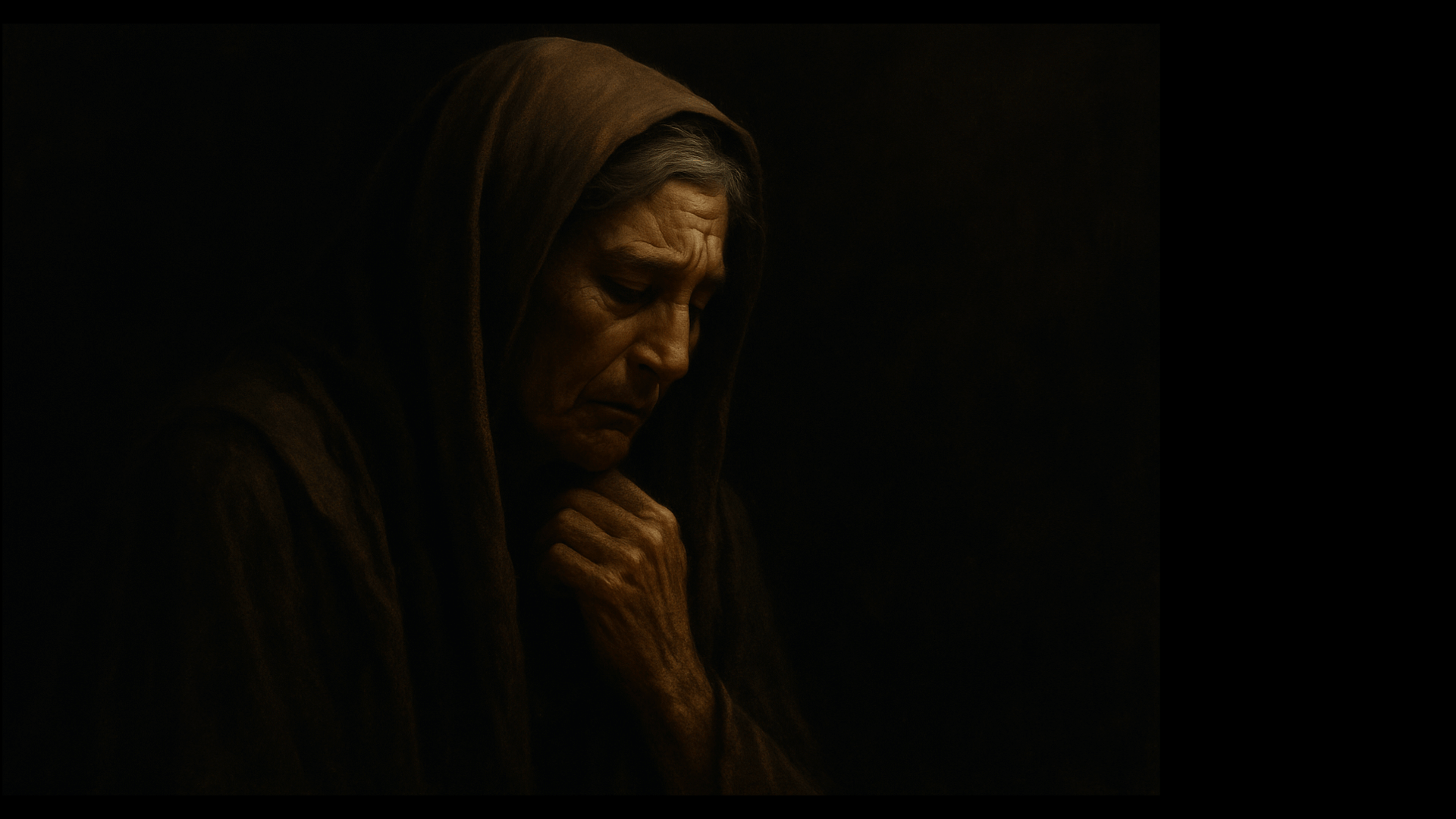
Those are Naomi’s words. Those are the words in Scripture. So if you’ve ever felt like the Almighty has made life bitter for you, that the LORD has brought you home empty, or that the LORD has caused you to suffer or sent tragedy upon you, you are not alone. That’s exactly how Naomi felt. She believed in God. But this is the human side of faith.
When we suffer we struggle with faith. And we wonder, “Why?”
Why?
What Naomi didn’t know was that her story wasn’t over, in so many ways it was still getting started.
As we turn the page to chapter 2, the story shifts.
1 Now there was a wealthy and influential man in Bethlehem named Boaz, who was a relative of Naomi’s husband, Elimelech.
2 One day Ruth the Moabite said to Naomi, “Let me go out into the harvest fields to pick up the stalks of grain left behind by anyone who is kind enough to let me do it.”
Naomi replied, “All right, my daughter, go ahead.” 3 So Ruth went out to gather grain behind the harvesters. And as it happened, she found herself working in a field that belonged to Boaz, the relative of her father-in-law, Elimelech.
Naomi is back home in Bethlehem with Ruth, but they are as poor as poor can be. When this story started, in chapter 1v1, we learned that it takes place, “In the days when the judges ruled in Israel…” If you read through the book of Judges which comes right before Ruth, you learn very quickly that this was a dark and desperate time in Israel’s history.
Generally speaking, the people of God were far from God and not following the Word of God. But in Bethlehem, they were! According to the Law of Moses, there was provision for those who were poor. And the way the community cared for the poor was to allow those who needed it to come and get the leftovers after the harvest from the fields.
If you were in need, you could go into a field, follow right behind the harvesters, and anything they missed or dropped or didn’t get, you could have. This was God’s way for making sure everyone in the community was cared for.
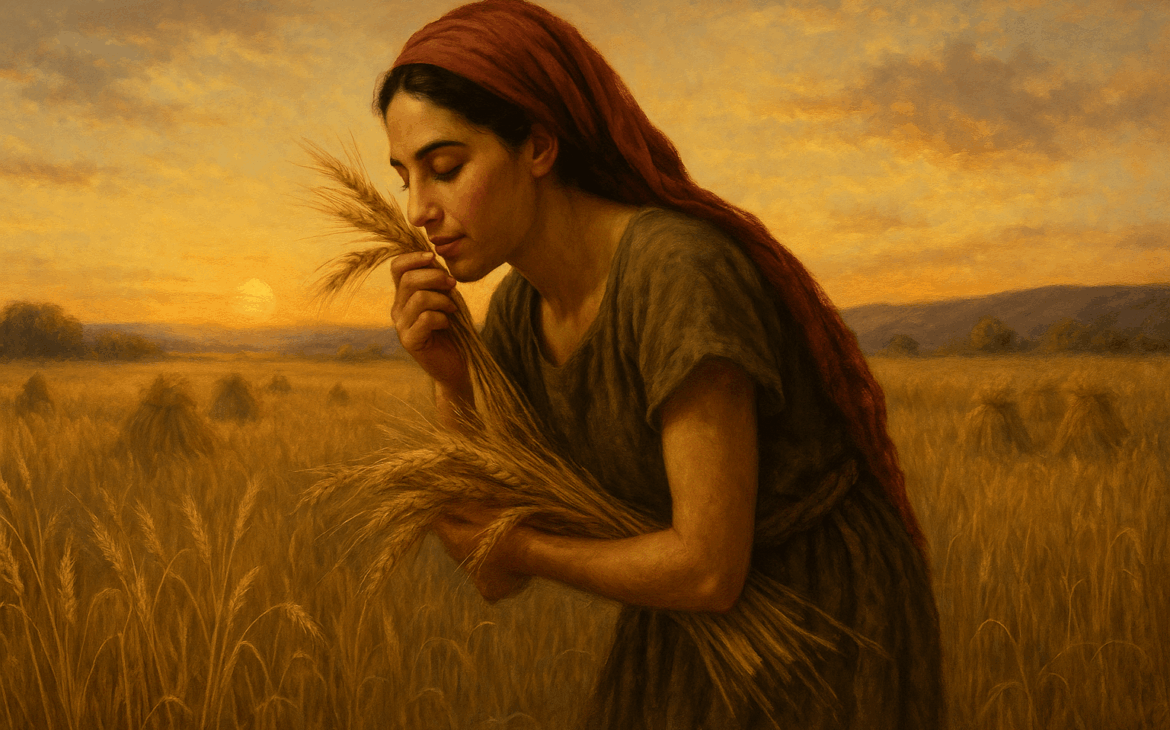
So Ruth goes out, with Naomi’s blessing, to see if she can find a field where she can gather some leftovers so that they can make bread. She just so happened to wander into a field owned by a man named Boaz who just so happened to be a relative of her father-in-law Elimelech! That’s an important note, I’ll share more about why in a moment.
Boaz isn’t there when Ruth shows up to gather the leftover grain from his field, but when he arrives, he notices Ruth right away. He goes to ask his foreman, “Who is that?”
6 And the foreman replied, “She is the young woman from Moab who came back with Naomi. 7 She asked me this morning if she could gather grain behind the harvesters. She has been hard at work ever since, except for a few minutes’ rest in the shelter.”
Boaz immediately goes over to Ruth and tells her to continue gathering grain from his field and not to go to any other field. She can gather all the grain she needs from his property and if she gets thirsty, she is welcome to get water from the well, too. He offers her food and even instructs his people to drop extra heads of barley for her to pick up. Boaz extends her an incredibly generous offer and Ruth can’t believe it. She falls at his feet to thank him and tells him that she doesn’t think she deserves this kindness, that she is a foreigner.
11 “Yes, I know,” Boaz replied. “But I also know about everything you have done for your mother-in-law since the death of your husband. I have heard how you left your father and mother and your own land to live here among complete strangers. 12 May the LORD, the God of Israel, under whose wings you have come to take refuge, reward you fully for what you have done.”
When Ruth got home that night with a basket full of grain, Naomi couldn’t believe it! She asked Ruth, where in the world did you go and get all this grain! Ruth told Naomi about Boaz. And then, it all clicked for Naomi. It was true, her husband had died. Her sons had died. She was too old to have any more sons. And so she thought she was without hope. But she hadn’t thought about the fact that she still had relatives in Bethlehem. Until now.
A Kinsman Redeemer
When Ruth told Naomi about Boaz, she said…
20 “May the Lord bless him!” Naomi told her daughter-in-law. “He is showing his kindness to us as well as to your dead husband. That man is one of our closest relatives, one of our family redeemers.”
God’s law not only made a way for those who were poor or in need to be able to have food, there were other provisions as well for people just like Naomi and Ruth. According to the Law of Moses, there was a provision for redeeming things and redeeming people which was all about how to get what or who had been cut out of the story of God back into the story of God.
According to the Law of Moses, the Kinsman Redeemer, or Family Redeemer, had the right and the ability to redeem or restore the LAND of a relative that had been lost or stolen, to redeem or restore RELATIVES who had been sold into slavery, and in this case, to redeem someone like Ruth whose husband had died but she had no sons.
The Kinsman Redeemer was the closest living relative who could marry Ruth and in so doing restore what had been lost and give her the hope of having a son.
Naomi had thought all hope was lost for Ruth because she had no more sons who could serve as a Kinsman Redeemer for Ruth, but now her wheels are turning because she hadn’t thought about Boaz! What’s more, it seems as if Boaz had noticed Ruth’s beauty and her character and is already showing her kindness!
At this point, Naomi goes into match maker mode and begins to counsel Ruth on what to do in order to continue to catch the eye of Boaz. Ruth does everything Naomi says. She picks out her best clothes, puts on nice perfume, she does all the things and as the story unfolds, Boaz tells Ruth that he wants to marry her but there’s one problem. There is another Kinsman Redeemer who is a closer relative and before he can marry her, he has to talk to him.
The next morning, Boaz goes to the town gates to discuss the matter with the town leaders to make sure everything is handled in the proper way. He asks the man who is first in line as the family redeemer if he wants to redeem the land, Naomi, and Ruth. He wants the land but he doesn’t want to take on the responsibility for Naomi and Ruth. He tells Boaz…
6 “Then I can’t redeem it,” the family redeemer replied, “because this might endanger my own estate. You redeem the land; I cannot do it.”
So Boaz buys the land that belonged to Elimelech; he redeems it, and he redeems Naomi and Ruth. They get married and then, God blesses them with a son.
From Suffering to Joy
Naomi, who had named herself Mara, bitter, because of the suffering she had gone through before, now praises God for His redemptive work in her life and the gift of a child, the gift of hope.
16 Naomi took the baby and cuddled him to her breast. And she cared for him as if he were her own. 17 The neighbor women said, “Now at last Naomi has a son again!” And they named him Obed. He became the father of Jesse and the grandfather of David.
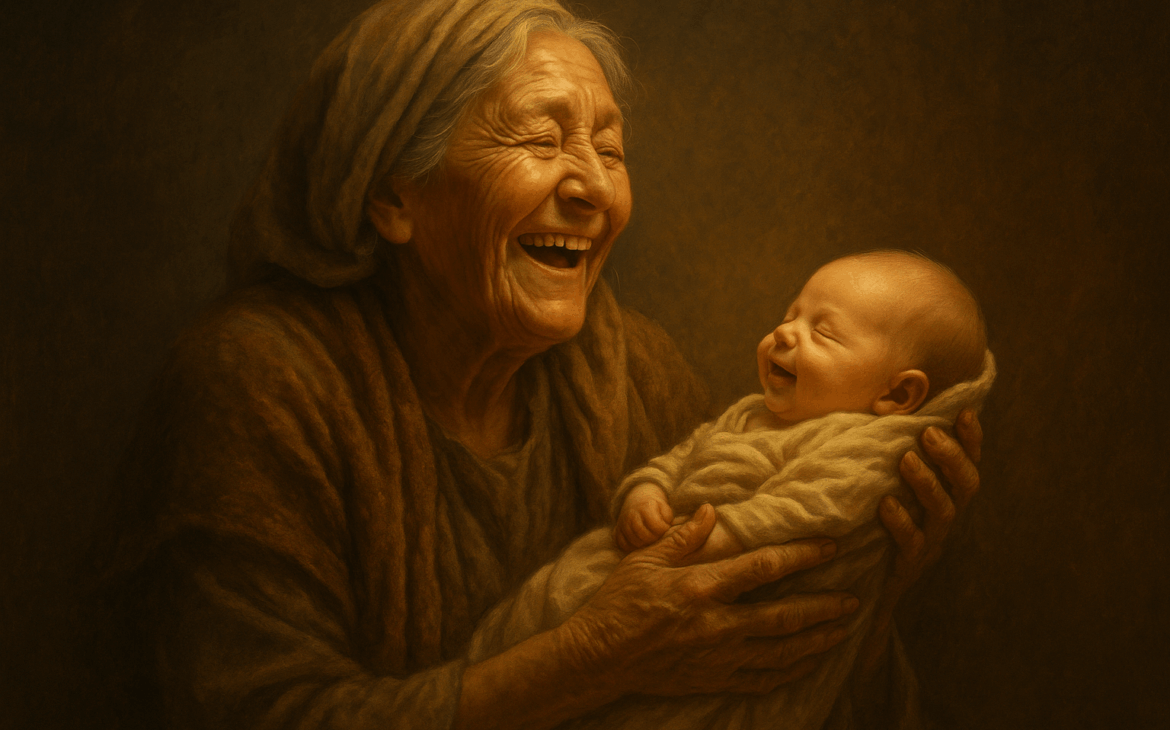
What Naomi didn’t know is that there was purpose in her pain, there was something happening in her suffering. She couldn’t see it before, but she can begin to see it now. God was working, God was present, God was not far off, God was always near.
Naomi couldn’t possibly have known it then, but God was working to do something greater than she could have ever possibly dreamed or imagined. Through her grandson, one day God’s Son, the Redeemer of the World would be born.
Obed would be the father of Jesse. Jesse would be the father of King David. And through the line of King David, Jesus Messiah would be born.
Suffering paved the way for something greater than Naomi could have dreamed.
Perspective & Promise
So what do you do with suffering?
When I think of my grandmother, I think of all the things she sewed. She loved to sew, and every Christmas, we would get something from her that she had made for us.
Some of you know this, but whenever you sew something, make something with needle and thread, it’s beautiful on one side. On one side you see the beautiful image that the needle and thread have made. You see the words that were cross stitched. You see the careful work, the wonderful colors, the attention to detail. But when you flip it over it looks like a mess. On the back side, it doesn’t look right, it certainly doesn’t look pretty, it looks disorganized and frayed.
From Naomi’s perspective, her life was like that. The suffering she was enduring made it to where all she could see was the mess that had been made. Her husband had died. Her sons had died. She was living in a foreign land with nothing, no means to support herself much less her daughters-in-law.
What she couldn’t see, and maybe what is sometimes hard for us to see, is that…
God is always at work weaving together a beautiful story of redemption.
Maybe today, you can’t see it either. From your perspective, all you can see is the suffering, the heartache, the pain. I get it. I understand. But I want to encourage you today because here’s what we believe in faith, God is at work in your life for your good and for his ultimate glory. Maybe you can’t see it but here’s the promise, God is working. God is present. God is with you. You are not alone.
What do we do when we suffer?
There might be a better question to ask. Instead of asking God, “Why?” Maybe ask the question, “Where?” Instead of asking, “Why God?” Maybe ask, “Where is God?” We don’t often have a good answer to the first question. In fact, there may not be an answer to the “Why God?” question that would ever satisfy your soul. But we know the answer to the “Where is God?” question. Where is God? When God the Son stepped down from Heaven to Earth He took on the name Emmanuel which literally means, God with us!
Where is God? In the middle of the suffering, the pain, when we’re walking through the valley of the shadow of death, when, like Naomi, we want to change our name to Bitter because of the suffering we feel like God has brought upon us, where is God then?
God is with us. God is with you. God is near.
And, God is working in redemptive ways in and through your suffering and pain for your good and for His ultimate glory.
So if I can encourage you today, hold on. Hold on to God. Hold on to His promise. Hold on to His presence.
Just ask Naomi, when all is said and done, we too have hope because of a Son. His name is Jesus! He is our Redeemer!
Want more from this Series… Click here.